2026 Courses & Registration
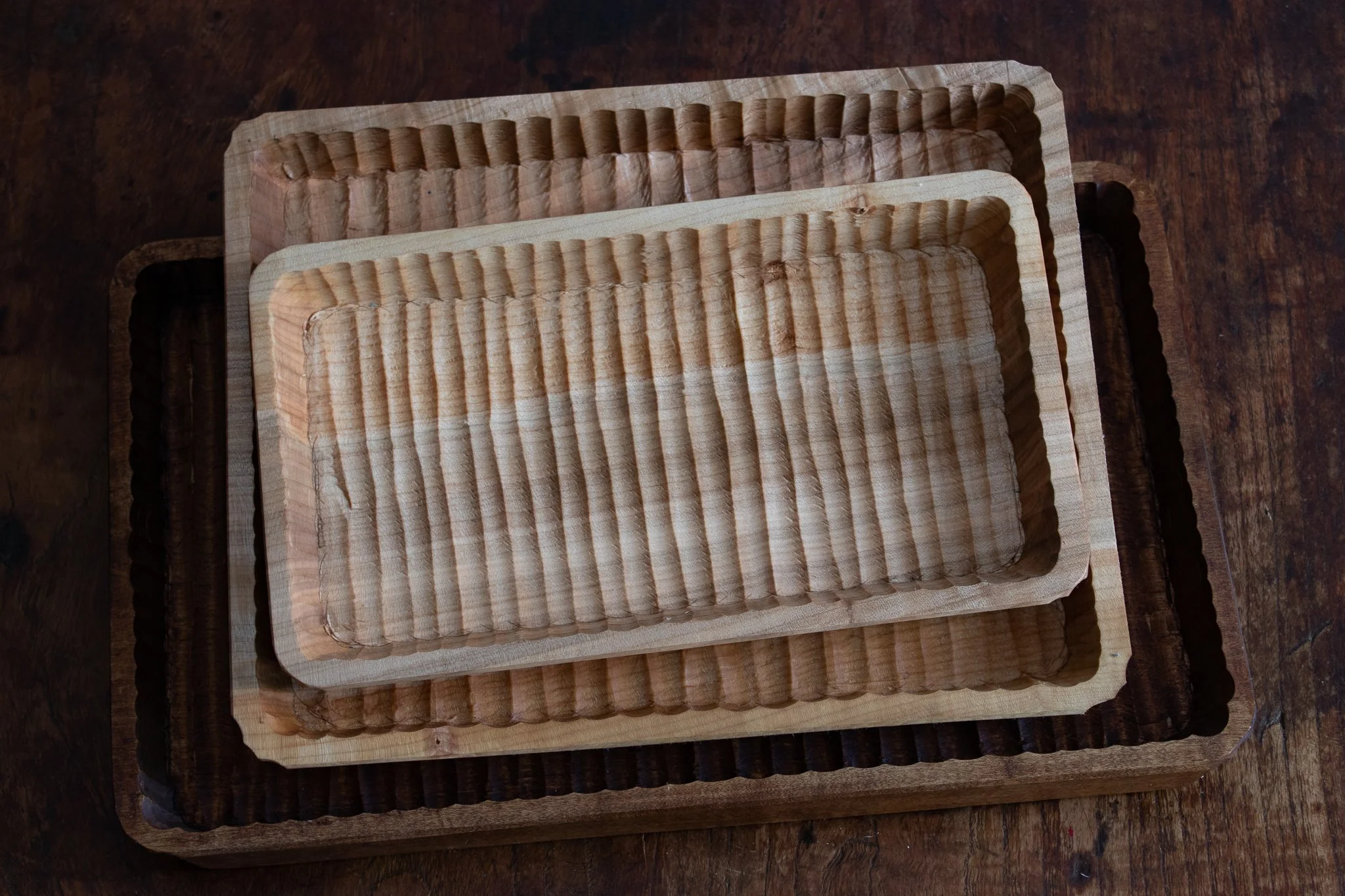
Wagatabon Japanese Tray Carving with Joey Traynor
Happy Winter Everyone!
We are proud to unfold another year of courses at Woodspirit School. We think learning hand skills and creating something beautiful and useful the slow way is relevant now more than ever. Our human history is rich with handwork traditions which have been passed down for many generations. We encourage you to take part in carrying this knowledge into the future.
Our course offerings for 2026 are on the Calendar here and the class descriptions are on the Registration Page here. Registration opens January 1, 2026
A little nitty gritty… We have added a few new instructors and courses this year, see the list below. Our Cancellation Policy is also included below which is fairly strict. We recommend covering your travel arrangements in case of cancellations. We will once again be sending out a discount code via email to returning students, because it’s so nice to see you again :)
We have tidied up and combined our Housing information. Housing can be costly, however the good news is that the nearest city campground Prentice Park will be taking reservations for the first time starting in February! We also have a new local rental in the works with up to 4 rooms that groups can rent together. For those who have never been to this area—it is an incredibly beautiful and special place with clean water, miles of lakeshore, the Apostle Islands, forests, boating, beaches, concerts, gorgeous sunsets, and small town quiet. Add some days to your trip to enjoy it all.
Ashland and Bayfield County residents can apply for grants to cover tuition here. Work Study opportunities are also available, scroll down for details.
Lastly, we’d like to encourage you to attend our 2026 Craft Night Series. It is an opportunity to meet our extraordinary instructors and learn about their craft and work through presentations, demonstrations, exhibitions, and experiences. It’s educational, fun, and free. We’d love to meet you there!
Related Courses/Events: Woodworking Courses
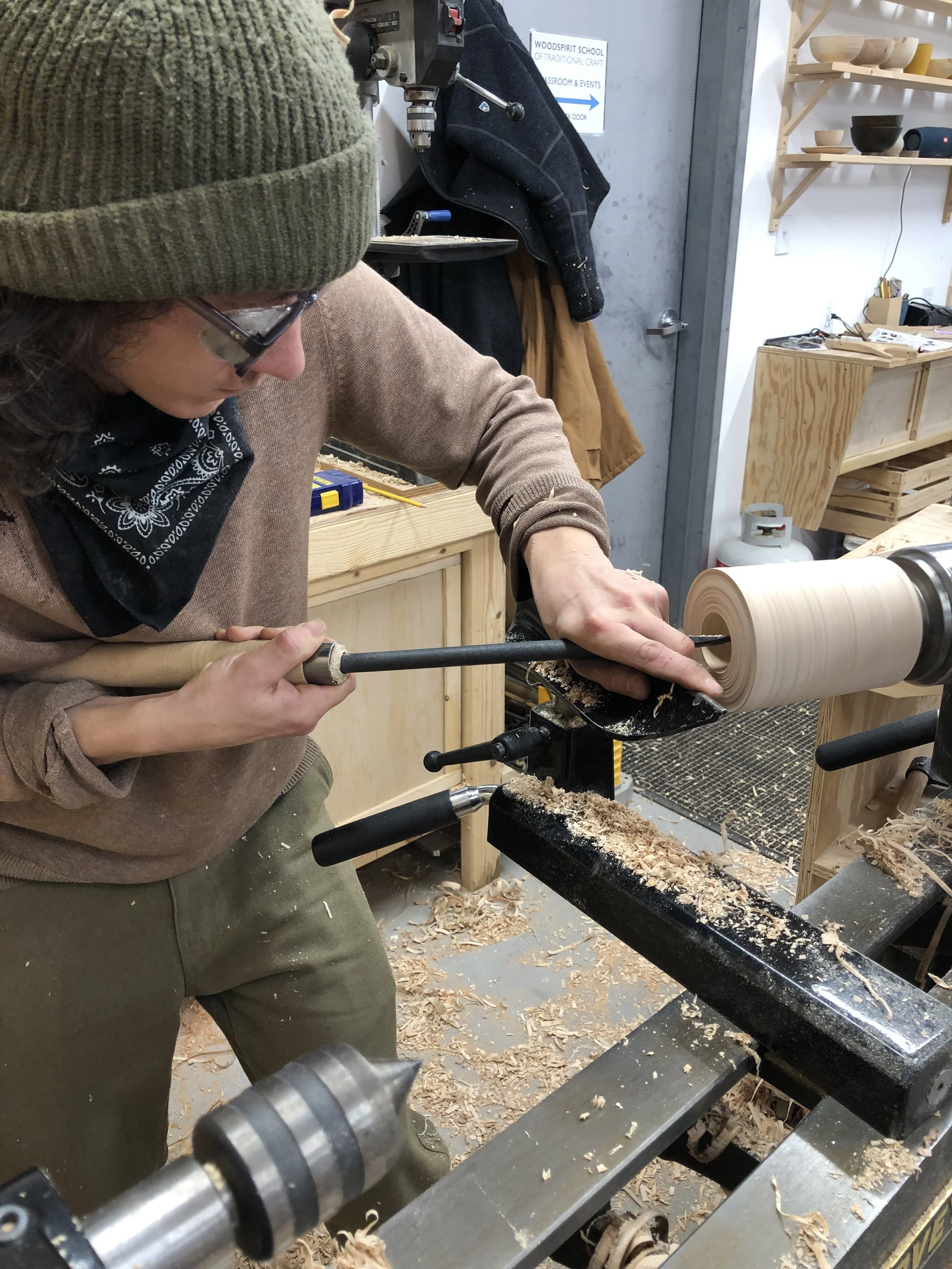
Jarrod Dahl teaches wood turning techniques informed by years of research of historic cups and bowls in Europe and studies in Japan. Students use modern lathe turning tools and hook tools. Basic roughing, hollowing, and fine finish turning with dry and green wood will be covered. Students will also discuss tool design, using woodenware, drying greenwood, and wood finishes: oils, urushi lacquer, and Hassui Ceramic.
$400 per day
Materials and Tools provided.
Email us here to begin the scheduling process for 2026.
Related Courses/Events: Textile Courses
FUTURE SESSIONS IN THE WORKS—JOIN THE WAITLIST TO LET US KNOW YOU ARE INTERESTED!
Dates:
Session 1: 9:45am-12:30pm, Saturday, January 10, 2026
Session 2: 9:45am-12:30pm, Saturday, January 17, 2026
Session 3: 9:45am-12:30pm, Saturday, January 24, 2026
Session 4: 9:45am-12:30pm, Saturday, February 7, 2026
Session 5: 9:45am-12:30pm, Saturday, February 14, 2026
Session 6: 9:45am-12:30pm, Saturday, February 21, 2026
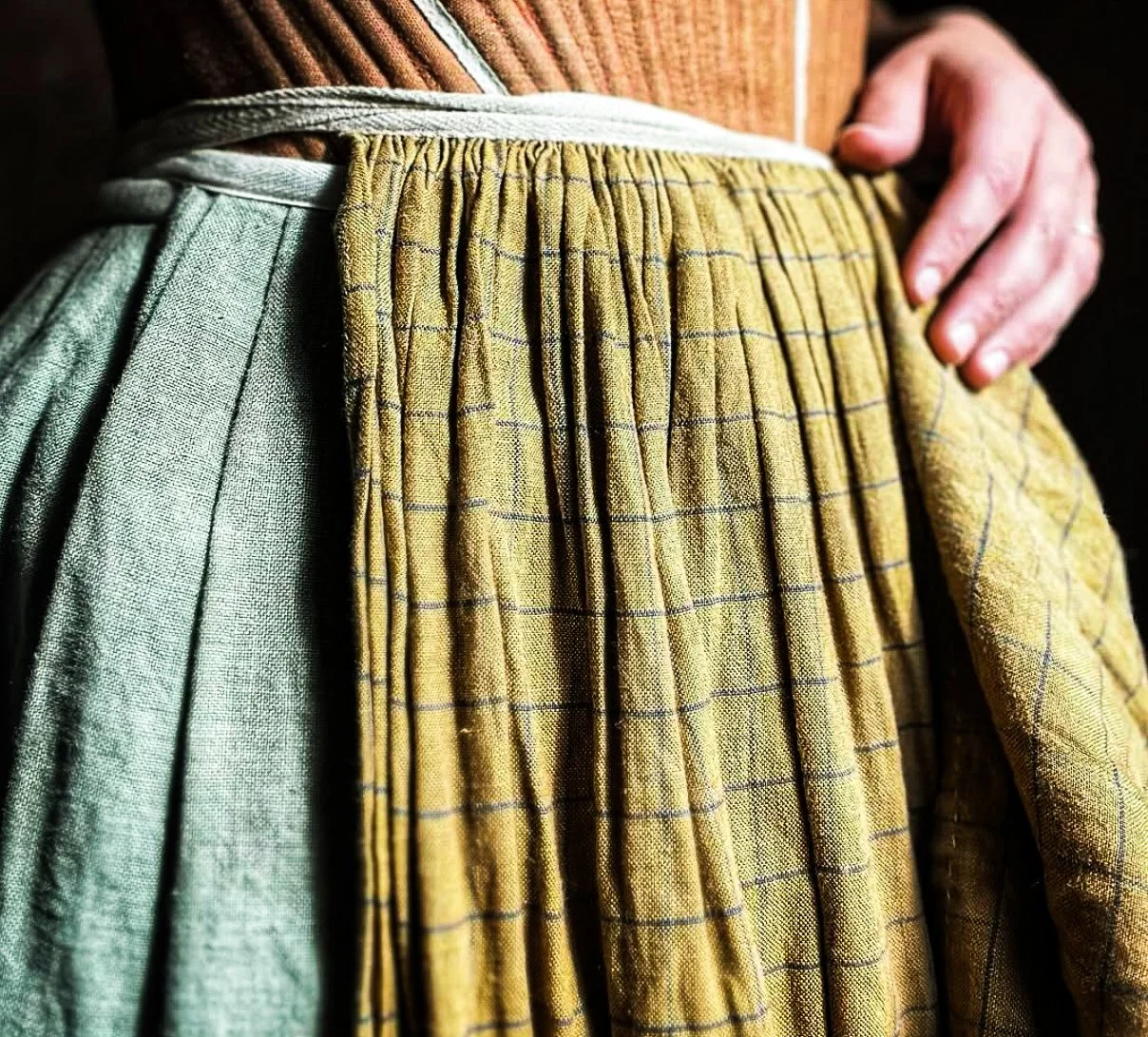
Description: Slow down and go back in time with this Winter Series of Hand Sewing lessons in a cozy classroom environment. LeeAra will teach you fundamental hand sewing techniques while you sew an historically accurate 18th century apron (or other project, see below). She will cover basic stitches like back stitch, running stitch, and whip stitch as well as how to gather fabric and attach it to an apron band. You can sign up for any one class and complete your project on your own at home, or sign up for several sessions and progress to more advanced techniques and additional projects as time and skill allow. No prior hand sewing experience needed! Snacks and hot cider will be provided.
Multiple Sessions, Various Projects: LeeAra will guide you through a variety of handsewing projects as time and skill level allow. For those that have completed their apron or anyone who would like to sew a different project, you can choose a simple tunic/shirt or a petticoat/skirt (see the last 7 photos). Bring machine washed and dried linen fabric or unwashed wool fabric. Yardage to bring is listed below based on size.
Other projects are also possible in consultation with LeeAra. Send us an email to inquire. Additional projects may require additional yardage and material fees.
Please Bring:
Sewing Kit
Pin cushion
Pins
Fabric scissors or otherwise sharp scissors
Thread to match fabric choice if matching is desired, plus white or cream thread to match tape. LeeAra prefers going a more traditional route and using natural 50/3 linen thread from Burnley and Trowbridge
Sewing needles and tape binding will be provided by LeeAra.
For the Apron: 1 yard pre-washed Linen Fabric (cotton OK, but linen preferred) (36 inches x 45-60 inches) Machine wash and machine dry the fabric prior to class. This assures that the bulk of any shrinking has already occurred and softens the linen for sewing. If one wishes to be historically accurate blue checks and stripes were very common in the 18th century, but any color/pattern will do. Here is a source for very high quality Irish linen and another decent source for linen fabric. This is a good source for wool fabric.
If you would like to sew something other than an Apron:
Tunic/shirt: Bring prewashed/dried linen fabric or unwashed wool fabric. 2.5 yards fabric (possibly 3 yards if large or tall)
Petticoat/skirt: Bring prewashed/dried linen fabric or unwashed wool fabric.
For a waist of 38 inches or less, 2 yards of fabric. If you have 45 inch width fabric, the pleats will not be quite as full. Choose 55-60 inches width for full pleats.
For a waist 60 inches or less, 2 yards of fabric, 55-60 inches width.
For a waist 60 inches or more, 4 yards of fabric.
For any other sewing project, please email us to find out how much yardage you will need.
Reading glasses/headlamp if you need them
Session Fee: $35 per session, $100 for all three in February
Material Fee: $10 (cash preferred) to be paid to the instructor directly during class.
LeeAra Anglin has been hand sewing for the better part of the last 6 years. Her projects range from 18th century gowns, petticoats, and shifts to replicas of 11th century extants found in southern Greenland and much in between that catches her fancy. She was taught by a young lass named Anna Eklund, who has handsewn gowns and outfits for renowned reenactors and weddings at Colonial Williamsburg. LeeAra absolutely adores the work of the hand in the construction of garments and is excited to share this love with you. She lives in a handmade house on a homestead in Mason with children, farm animals, and gardens. @heritage.hill.homestead

Bird Carving with Mike Loeffler
Related Courses/Events: Woodworking Courses
Registration closes April 24 so the instructor can prepare materials.
Dates: Friday, Saturday & Sunday, May 1-3, 2026 9am-5pm
Optional: Thursday, April 30, 6pm Drink Up!Norwegian Ale Hens Craft Night Series slideshow with Mike Loeffler
Description: This course will introduce students to the world of bird carving. This is a great class for beginners and experienced carvers alike. We will focus on song birds commonly found in the sub-boreal forest of the Lake Superior region. Of course, each bird is different, but the general form, anatomy, and carving techniques are transferable to many carving projects. In the course we will acquaint ourselves with bird anatomy to help develop an eye for the finished forms that we’re trying to achieve. Students will learn various knife grasps to shape wooden blanks effectively and safely. We will discuss material selection as well as tool sharpening so students can continue developing their skills at home. The carved and painted details bring these carvings to life. We will discuss paint, painting techniques, and other finishing details along the way. Students may purchase additional blanks to take home with them.
Required Tools:
Pencil
Fixed blade straight knife (I use a Mora carving knife 120).
Optional Tools:
Feel free to bring other carving tools such as small gouges, v-tools, and knives.
Workshop Fee: $285.
Materials fee: $50 to be paid directly to the instructor during class.
MIKE LOEFFLER is a woodworker and carpenter inspired by the natural materials of the forested landscapes he loves. Although he was always fascinated with wood, he had the opportunity to explore craft through an internship at North House in 2011. He later participated in the Artisan Development Program (2018-2019) at North House deepening his knowledge of craft and education. Mike explores fågelskålar (bird-shaped ale bowls), small furniture design, as well as traditional building techniques. During his travels in Scandinavia he had opportunity to work with Nicke Heldorff, a naturalist, avid birder, and carver. Ever since that experience Mike has been sketching and carving the birds that live in his region. He gets great enjoyment from “lighting the spark” and encouraging people to connect to themselves and a larger craft community through handwork. mike-loeffler.com

Related Courses/Events: Basketry Courses
Registration closes May 1 so the instructor can prepare materials.
Dates: Sat-Sun, May 16-17, 2026 9am-5pm
Optional: Friday, May 15 Baskets in Lichtenfels: International Basket Festival Craft Night Series slideshow and basket collection exhibition with Jarrod Dahl
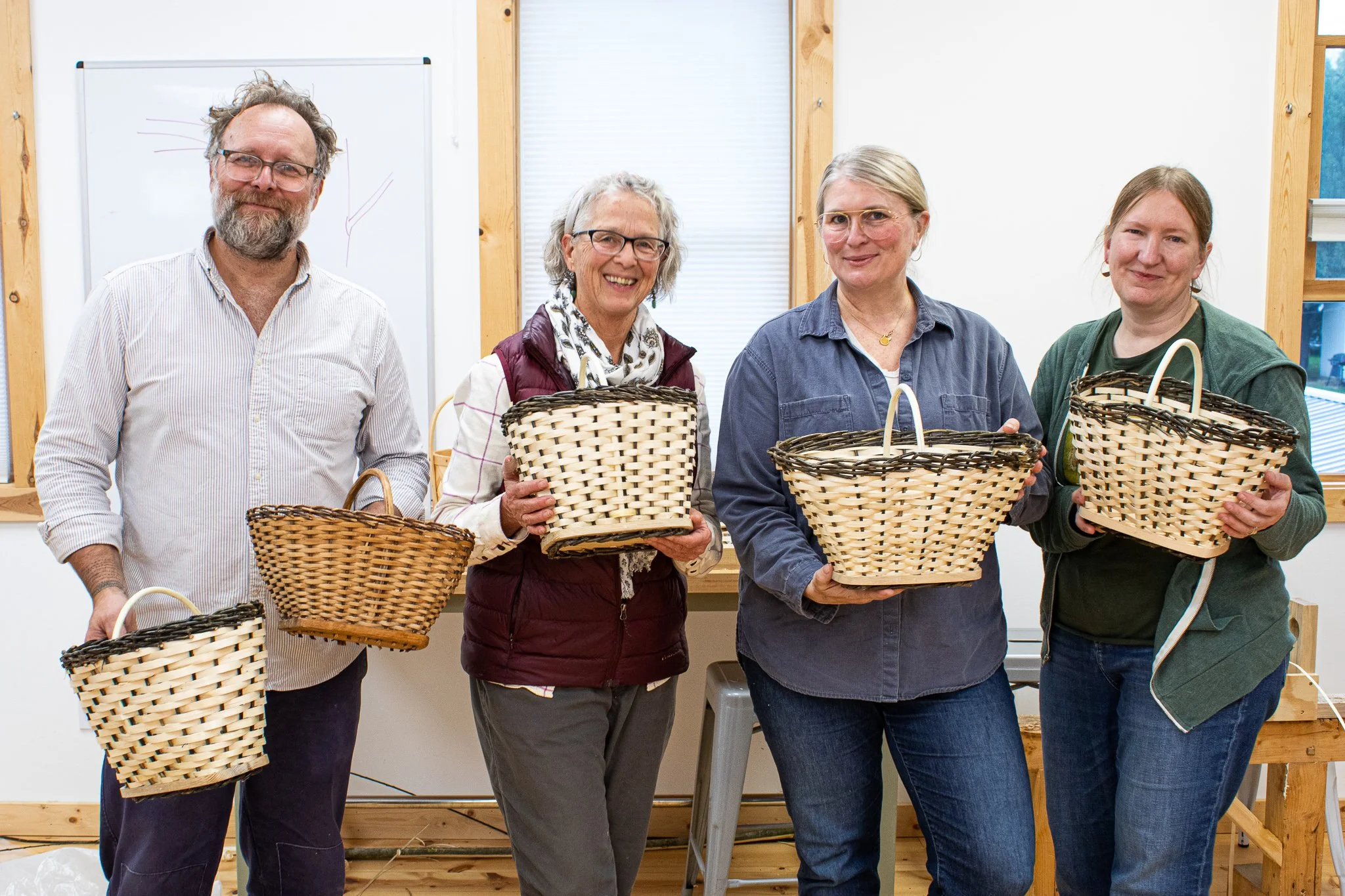
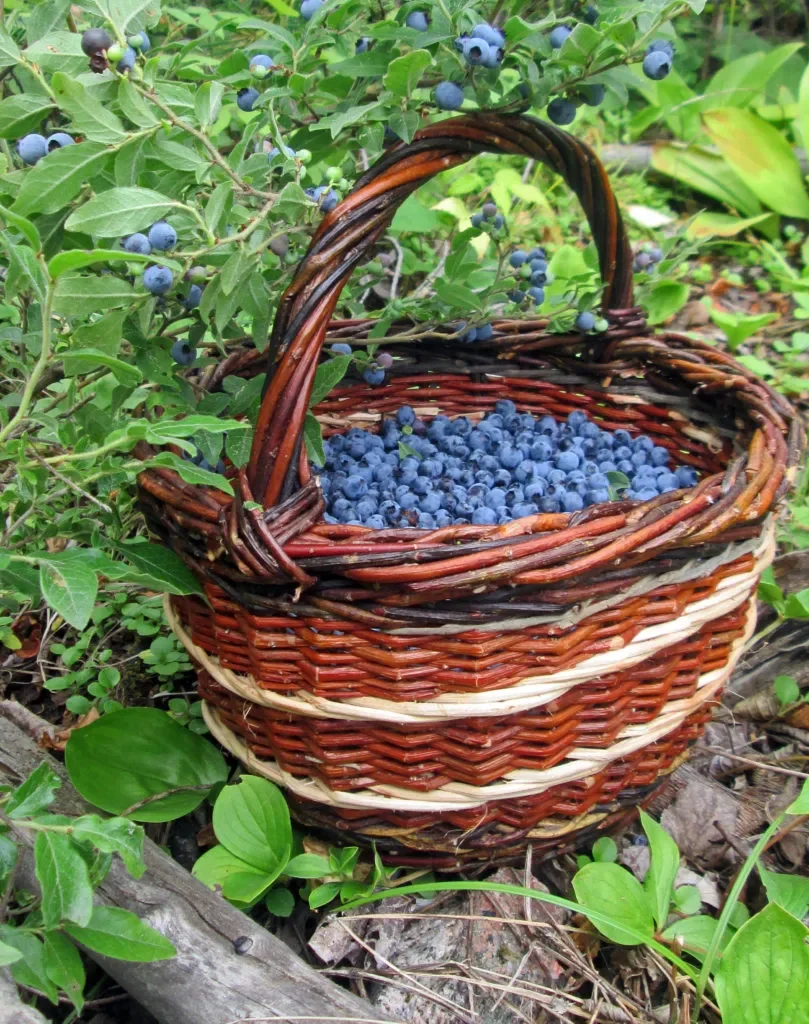
Description: Willow laundry baskets are durable, useful and good looking. In this two-day class you will learn the basics of stake and strand willow basketry. We’ll start by learning about growing, harvesting, and preparing brown (bark on) willow for weaving.Then we will learn techniques for weaving a base, ‘pricking up’ the uprights, weaving simple 3 or 4 rod wales, and basic patterns like randing. We will finish up the basket with a nice border and roped willow handles. This workshop has the beginner in mind, but all skill levels are welcome. The aim of this class is to give students enough knowledge and experience to make baskets on their own. This course requires hand strength and stamina.
Tools:
Bring pruning shears (these are good ones Okatsune secateurs)
Craft knife (optional) (Morakniv 106 or 120 recommended)
Rapping iron (optional)
Bodkin (optional)
There will be a few rapping irons, knives, and bodkins to share
Workshop Fee: $200.
Materials fee: $50 cash, payable directly to the instructor during class.
JARROD DAHL is a full-time craftsperson, teacher, and writer. Jarrod has extensive knowledge of harvesting and processing natural materials, forging and using hand tools, and making a wide variety of craft from basketry to canoes. He began making black ash baskets in 1997 and has since made many kinds of baskets including birch bark, knutkorg, split willow, and root. He studied with basket weavers Steen Madsen, Hege Aasdal, Bjorn Majors, Vladimir Yarish and Scogin Zimmerman-Mayo. He takes a philosophical, historical and pragmatic approach to making, teaching, and advocating for handcraft. Jarrod writes a blog on craft and runs Woodspirit Handcraft with his wife in Northern Wisconsin. www.woodspirithandcraft.com instagram: @jarrod__dahl @woodspirithandcraft
Related Courses: Basketry Courses
Dates: Thursday to Sunday, June 4-7, 2026 9am-5pm
Optional: Wednesday, June 3 Korgar: So Many Scandinavian Baskets! Craft Night Series slideshow & basket collection exhibition plus splint making demonstration with Jarrod Dahl.
Description: Inspired by Scandinavia’s rich basketry traditions this 4-day class will explore a few of the many forms of split material baskets found in Sweden and Norway. In general, baskets styles from around the world are directly related to their intended use, but the availability of specific materials also has a big influence on the shapes and styles. In Scandinavia, thin flat “splints” were commonly used to make baskets for the activities and needs of rural farm life. These splints were hand split and shaved from larger shrubs like willow and hazel.
We will begin this workshop by learning about where to gather, harvest and process larger willow saplings into rough splints. We will spend a good portion of the time splitting and prepping willow for weavers. We will focus on two splitting methods—hand splitting and the use of a splitting brake—a simple jig used to help with leverage while splitting. We will then focus on shaving the rough splints into smooth weaving material for our baskets. After the weaving materials are made students can choose which basket to make from the available basket designs offered.
Here are a few examples:
a plank bottom handled Swedish picnic basket
a small plank bottom backpack with leather straps
a skruk (a Swedish type of basket woven backwards from rim to base) or
a vedmeis, a Norwegian two handled utility basket
Some students may not be able to make all the split material needed for their project. Extra rough split material will be available for purchase by students as needed in addition to the basic material fee associated with the basket design you choose to make.
This class is for basket lovers, basket weavers and woodworkers alike.
Tools to Bring:
Pruning Shears (Okatsune recommended)
Optional: Craft knife (Morakniv 106 or 120 recommended)
Workshop fee: $375
Material fees:
Please note that material fees vary by project chosen, and can be paid in cash during class.
Plank bottom baskets without handle $25, with handle $50
Pre-bent and dried handles for vedmeis $25
Veg Tan leather straps for backpack $TBD
Extra splints ~$35-75 depending on quantity used
Jarrod Dahl received a grant in 2024 to study Scandinavian Basketry through the American Swedish Foundation.
JARROD DAHL is a full-time craftsperson, teacher, and writer. Jarrod has extensive knowledge of harvesting and processing natural materials, forging and using hand tools, and making a wide variety of craft from basketry to canoes. He began making black ash baskets in 1997 and has since made many kinds of baskets including birch bark, knutkorg, split willow, pine splint, and root. He studied with basket weavers Steen Madsen, Hege Aasdal, Bjorn Majors, Vladimir Yarish and Scogin Zimmerman-Mayo. He takes a philosophical, historical and pragmatic approach to making, teaching, and advocating for handcraft. Jarrod writes a blog on craft and runs Woodspirit Handcraft with his wife in Northern Wisconsin. www.woodspirithandcraft.com instagram: @jarrod__dahl @woodspirithandcraft
Related Courses: Textile Courses
Dates: Choose one or both days
WOOL: Saturday, June 13, 10am-4pm
COTTON & FLAX: Sunday, June 14, 10am-4pm
Optional: Friday, June 12, 6pm Turning Flax into Cloth Craft Night Series presentation & demonstration with Jazmin Hicks-Dahl. Watch or take part in the processes of making flax plants into fiber, thread and cloth.
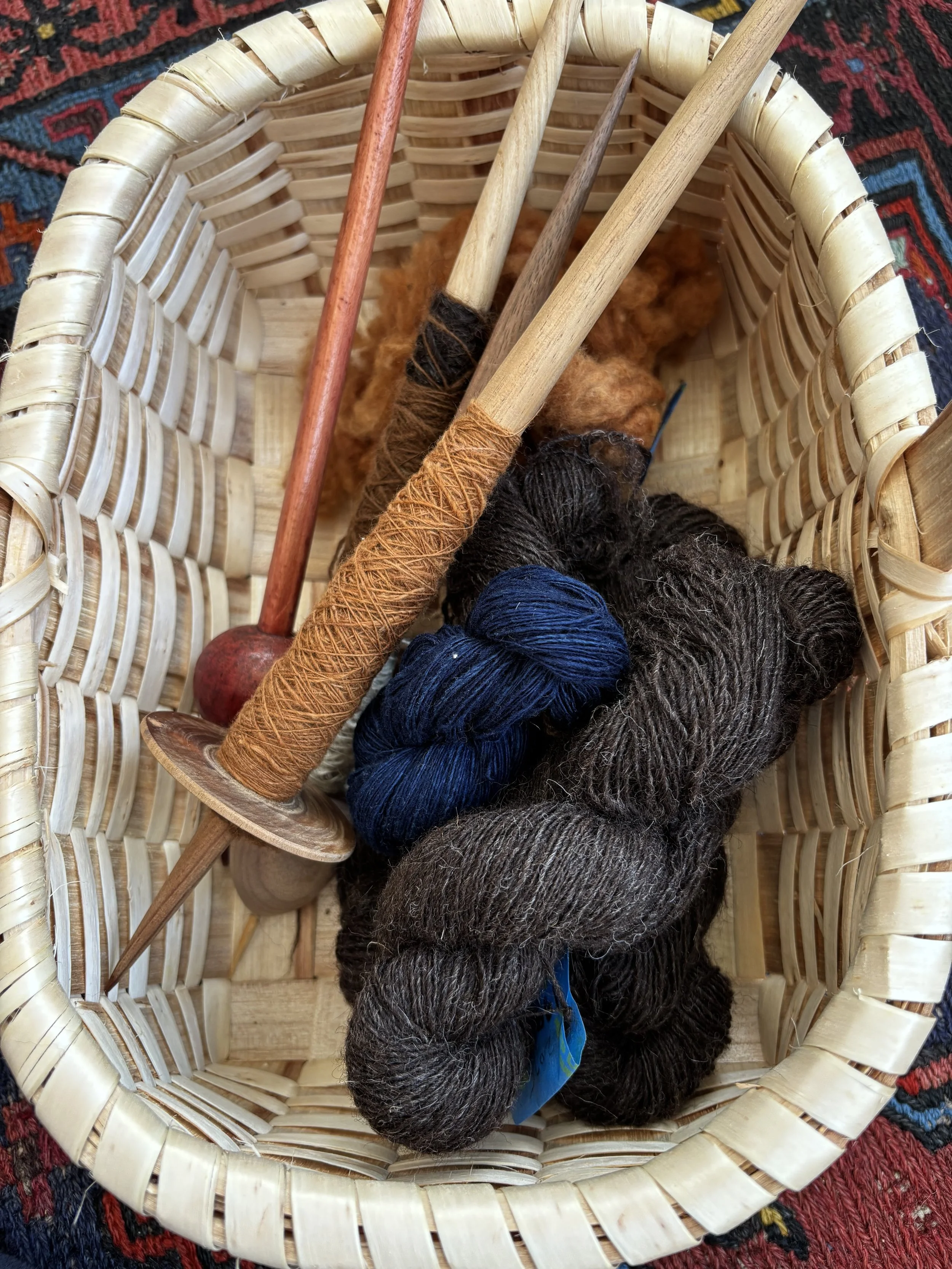
Description: Spinning fiber into thread is a fundamentally human, age old skill that transverses eons of time and human cultures. Since we have had hands and fingers, and felt cold, we have known how to spin thread. We will begin learning this challenging and (when you get the hang of it) relaxing activity in this introductory course by settling in, relaxing, and focusing on coordination and feel. We will try out both suspended (“drop”) spindles and supported spindles (they spin on something) to turn fibers into thread. We will progress to plying, using nostepinne and niddy noddy, as time allows. We will discuss fiber preparation, washing, finishing, organizing and storing your thread, preparation for dyeing, and using your thread for weaving and knitting. Resources for exploring more spindles and fibers will also be shared.
WOOL: On Saturday we will spin wool fibers. We will explore a few different kinds of sheep wool and Alpaca too.
COTTON & FLAX: On Sunday we will spin a few kinds of cotton and use a distaff to spin Woodspirit School homegrown flax and European line.
Workshop Fee: $60 for a single day, $100 for both days
Optional: Spindle and Fiber Kit: A spindle and an ounce of fiber for more practice at home, $40.
JAZMIN HICKS-DAHL runs Woodspirit Handcraft and Woodspirit School in Ashland, WI with her woodworker husband. She makes indigo dyed and handwoven textiles when she can. She has been growing flax and indigo since 2017. She studied flax processing with Andrea Mycklebust and back strap weaving and spindle spinning with Louise Young. Her background includes art & design, a love of natural materials, folk textiles, and an obsession with indigo since her teens. @loveblueindigo
Related Courses: Textile Courses
Registration closes June 26 so the instructor can prepare materials.
Date: Friday-Sunday, July 10-12, 9:30am-4:30pm
Optional: Friday, July 9, 6pm Japanese Textile Travels Craft Night Series with Jazmin Hicks-Dahl. Jazmin will present photos from three trips to Japan, display her textile finds and share recommendations for future travelers.
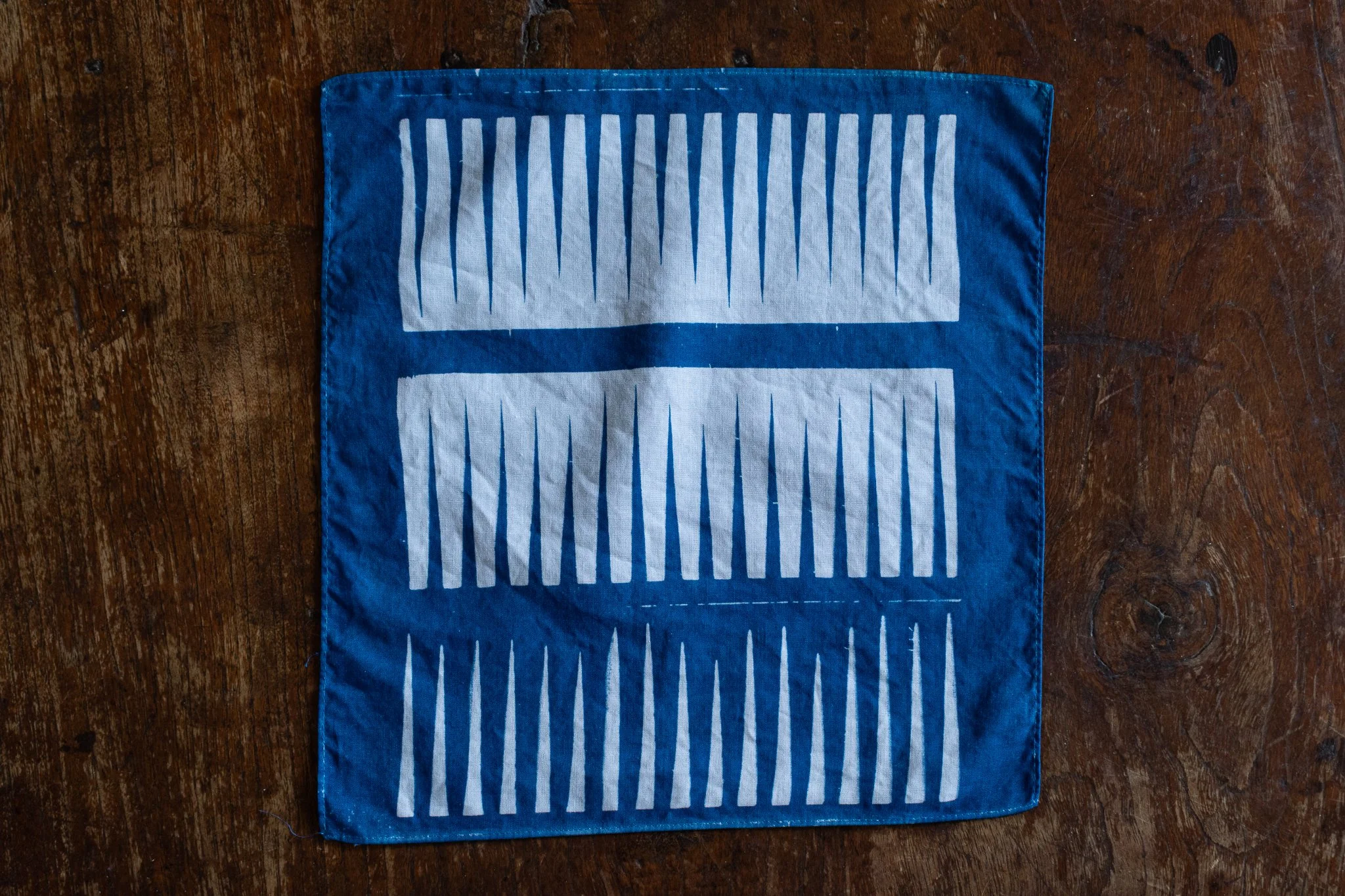
Description: Katazome is a Japanese method of dyeing fabrics using a resist paste applied through a stencil. Over three days we will go through the process of designing and making stencils and applying paste through them onto cotton fabric. We will dye the fabric in special sukumo indigo vats from composted indigo leaves grown in Japan by Watanabe’s. This is a unique opportunity to experience sukumo which is very rare in the US and requires 1 year to make and 2 weeks to prepare for dyeing. Read about it here. We will discuss the magic of indigo dyeing, fermentation, vat maintenance, and different vat recipes.
The instructor will be in touch about preparing an appropriate design before class begins.
Bring:
apron/old shirt for dyeing in
well fitting rubber/nitrile gloves, 3 pairs
reading glasses if you need them
headlamp (optional)
Workshop Fee: $285
Materials Fee: $50 includes all materials, dyeing supplies, handouts, and fabric. Please pay the teacher directly during class.
Classroom: The classroom space is on the second floor accessible by stairs and outside under a shade tent. There is a small refrigerator, coffee/tea area and a place for eating lunch together.
JAZMIN HICKS-DAHL runs Woodspirit Handcraft and Woodspirit School in Ashland, WI with her woodworker husband. She makes indigo dyed and handwoven textiles when she can. She has been growing indigo since 2017. She studied katazome, sukumo, and indigo dyeing with Takayuki Ishii and shibori with Hiroshi Murase and Yoshiko Wada in 2019. She learned about making and maintaining sukumo vats from Kenta Watanabe in 2025. Read about it here. Her background includes art & design, a love of natural materials, folk textiles, and an obsession with indigo since her teens. @loveblueindigo
Related Courses: Textile Courses
Registration closes July 10 so the instructor can prepare materials.
Dates: Session A—Itajime—Friday, July 17, 9:30am-4:30pm
Optional: Thursday, July 16 All Blue: Japanese Indigo Dyeing Experience Craft Night Series with Jazmin Hicks-Dahl. Watch or try out dyeing in a sukumo indigo vat. Registration is required to participate in craft night dyeing.
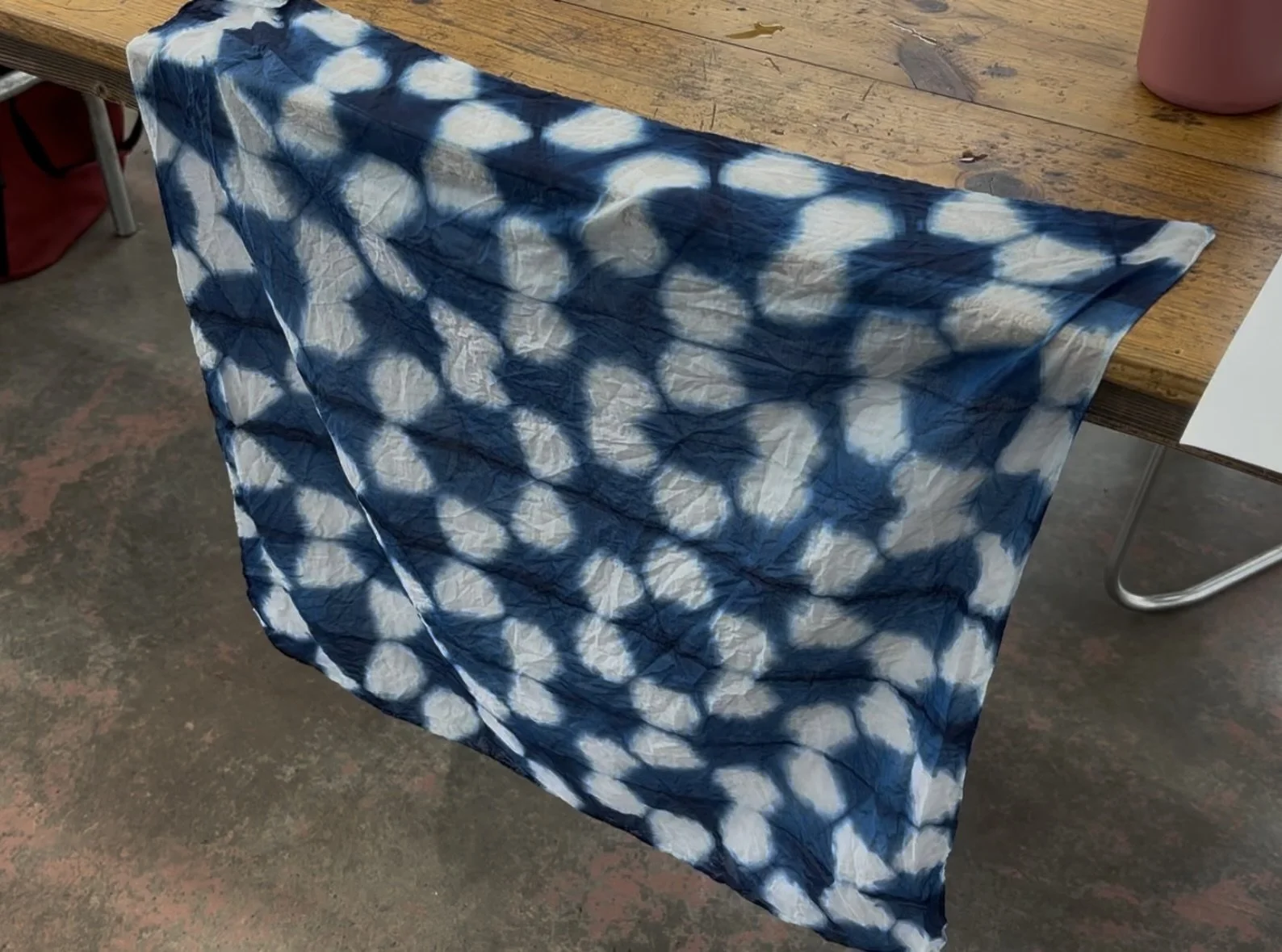
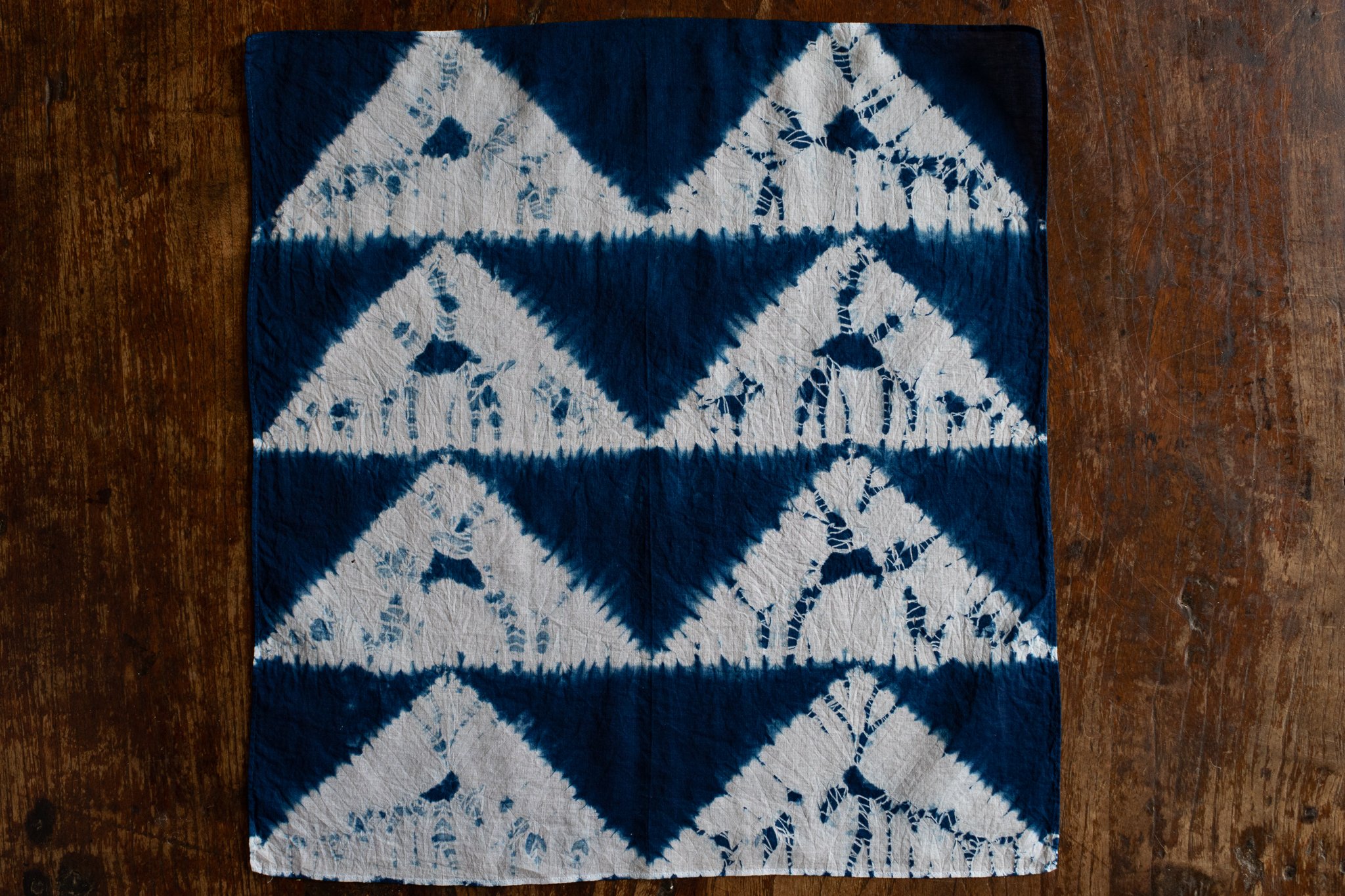
Description: Shibori is a traditional Japanese dyeing technique that involves manipulating fabric through tying, folding, or stitching to create unique patterns. We will learn one clamping, stitching or tying technique in each session to create patterns on cotton and silk cloth. In the afternoons we will dye our fabric in special sukumo indigo vats from composted indigo leaves grown in Japan by Watanabe’s. This is a unique opportunity to experience sukumo which is very rare in the US and requires 1 year to make and 2 weeks to prepare for dyeing. Read about it here. We will discuss the magic of indigo dyeing, fermentation, vat maintenance, and different vat recipes. You will also be able to browse Jazmin’s collection of textiles and dyeing books.
Sign up for several sessions to learn additional techniques.
Session A Itajime will focus on folding and clamping.
Session B Arashi will focus on tying fabric around a tube.
Session C Makiage will focus on stitching and tying shapes.
You can sign up for an extra session during the Indigo Taster Weekfor more opportunities to dye your work, July 21-24.
Bring:
apron/old shirt for dyeing in
well fitting rubber/nitrile gloves, 3 pairs
reading glasses if you need them
small scissors and/or seam ripper
headlamp (optional)
Workshop Fee: $80 per session
Materials Fee: $25 per session to be paid directly to the instructor during class, includes dyeing supplies, handouts, sewing materials, and fabric.
Classroom: The classroom space is on the second floor accessible by stairs and outside under a shade tent. There is a small refrigerator, coffee/tea area and a place for eating lunch together.
JAZMIN HICKS-DAHL runs Woodspirit Handcraft and Woodspirit School in Ashland, WI with her woodworker husband. She makes indigo dyed and handwoven textiles when she can. She has been growing indigo since 2017. She studied katazome, sukumo, and indigo dyeing with Takayuki Ishii and shibori with Hiroshi Murase and Yoshiko Wada in 2019. She learned about making and maintaining sukumo vats from Kenta Watanabe in 2025. Read about it here. Her background includes art & design, a love of natural materials, folk textiles, and an obsession with indigo since her teens. @loveblueindigo
Related Courses: Textile Courses
Registration closes July 10 so the instructor can prepare materials.
Dates: Session B—Arashi—Saturday, July 18, 9:30am-4:30pm
Optional: Thursday, July 16 All Blue: Japanese Indigo Dyeing Experience Craft Night Series with Jazmin Hicks-Dahl. Watch or try out dyeing in a sukumo indigo vat. Registration is required to participate in dyeing.
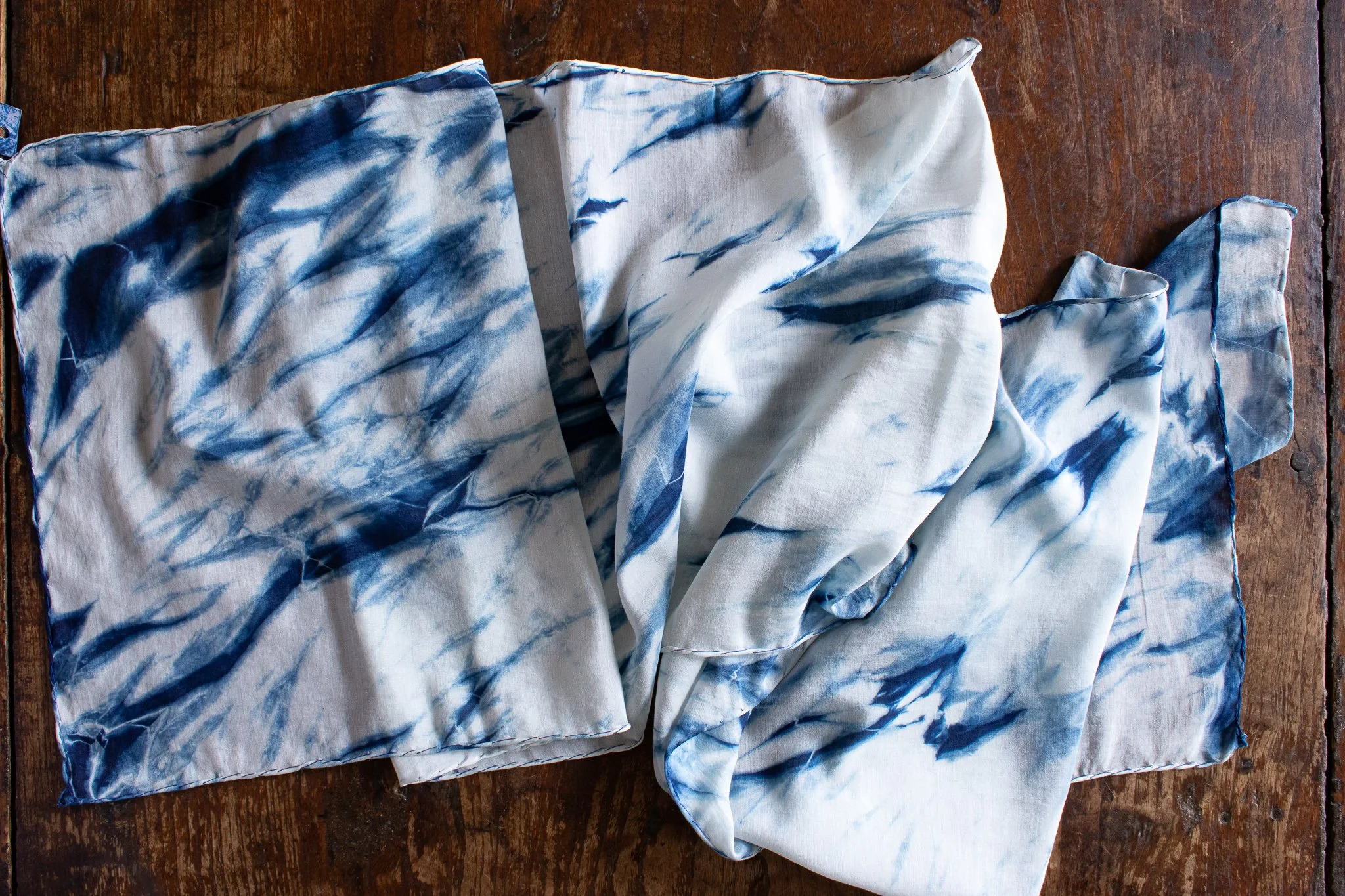
Description: Shibori is a traditional Japanese dyeing technique that involves manipulating fabric through tying, folding, or stitching to create unique patterns. We will learn one clamping, stitching or tying technique in each session to create patterns on cotton and silk cloth. In the afternoons we will dye our fabric in special sukumo indigo vats from composted indigo leaves grown in Japan by Watanabe’s. This is a unique opportunity to experience sukumo which is very rare in the US and requires 1 year to make and 2 weeks to prepare for dyeing. Read about it here. We will discuss the magic of indigo dyeing, fermentation, vat maintenance, and different vat recipes. You will also be able to browse Jazmin’s collection of textiles and dyeing books.
Sign up for several sessions to learn additional techniques.
Session A Itajime will focus on folding and clamping.
Session B Arashi will focus on tying fabric around a tube.
Session C Makiage will focus on stitching and tying shapes.
You can sign up for an extra session during the Indigo Taster Week for more opportunities to dye your work, July 21-24.
Bring:
apron/old shirt for dyeing in
well fitting rubber/nitrile gloves, 3 pairs
reading glasses if you need them
small scissors and/or seam ripper
headlamp (optional)
Workshop Fee: $80 per session
Materials Fee: $25 per session to be paid directly to the instructor during class, includes dyeing supplies, handouts, sewing materials, and fabric.
Classroom: The classroom space is on the second floor accessible by stairs and outside under a shade tent. There is a small refrigerator, coffee/tea area and a place for eating lunch together.
JAZMIN HICKS-DAHL runs Woodspirit Handcraft and Woodspirit School in Ashland, WI with her woodworker husband. She makes indigo dyed and handwoven textiles when she can. She has been growing indigo since 2017. She studied katazome, sukumo, and indigo dyeing with Takayuki Ishii and shibori with Hiroshi Murase and Yoshiko Wada in 2019. She learned about making and maintaining sukumo vats from Kenta Watanabe in 2025. Read about it here. Her background includes art & design, a love of natural materials, folk textiles, and an obsession with indigo since her teens. @loveblueindigo
Related Courses: Textile Courses
Registration closes July 10 so the instructor can prepare materials.
Dates: Session C—Makiage—Sunday, July 19, 9:30am-4:30pm
Optional: Thursday, July 16, 6pm All Blue: Japanese Indigo Dyeing Experience Craft Night Series with Jazmin Hicks-Dahl. Watch or try out dyeing in a sukumo indigo vat. Registration is required to participate in dyeing.
Description: Shibori is a traditional Japanese dyeing technique that involves manipulating fabric through tying, folding, or stitching to create unique patterns. We will learn one clamping, stitching or tying technique in each session to create patterns on cotton and silk cloth. In the afternoons we will dye our fabric in special sukumo indigo vats from composted indigo leaves grown in Japan by Watanabe’s. This is a unique opportunity to experience sukumo which is very rare in the US and requires 1 year to make and 2 weeks to prepare for dyeing. Read about it here. We will discuss the magic of indigo dyeing, fermentation, vat maintenance, and different vat recipes. You will also be able to browse Jazmin’s collection of textiles and dyeing books.
Sign up for several sessions to learn additional techniques.
Session A Itajime will focus on folding and clamping.
Session B Arashi will focus on tying fabric around a tube.
Session C Makiage will focus on stitching and tying shapes.
You can sign up for an extra session during the Indigo Taster Week for more opportunities to dye your work, July 21-24.
Bring:
apron/old shirt for dyeing in
well fitting rubber/nitrile gloves, 3 pairs
reading glasses if you need them
small scissors and/or seam ripper
headlamp (optional)
Workshop Fee: $80 per session
Materials Fee: $25 per session to be paid directly to the instructor during class, includes dyeing supplies, handouts, sewing materials, and fabric.
Classroom: The classroom space is on the second floor accessible by stairs and outside under a shade tent. There is a small refrigerator, coffee/tea area and a place for eating lunch together.
JAZMIN HICKS-DAHL runs Woodspirit Handcraft and Woodspirit School in Ashland, WI with her woodworker husband. She makes indigo dyed and handwoven textiles when she can. She has been growing indigo since 2017. She studied katazome, sukumo, and indigo dyeing with Takayuki Ishii and shibori with Hiroshi Murase and Yoshiko Wada in 2019. She learned about making and maintaining sukumo vats from Kenta Watanabe in 2025. Read about it here. Her background includes art & design, a love of natural materials, folk textiles, and an obsession with indigo since her teens. @loveblueindigo

Related Courses: Textile Courses Shibori, Katazome, and Craft Night Sessions
Dates/Times:
July 21-24, 2026
Tuesday, Wednesday, Thursday, or Friday
Morning: 9:30am-12:30pm
Afternoon: 1:30pm-4:30pm
Choose your Day and Time: Morning or Afternoon, in the drop down menu.
Description: Experience truly living blue by dyeing a cotton square with special sukumo indigo vats from composted indigo leaves grown in Japan by Watanabe’s. This is a unique opportunity to experience sukumo which is very rare in the US and requires 1 year to make and 2 weeks to prepare for dyeing. Read about it here. We will dip the fabric several times in the vats to get a deep dark blue. Afterwards, Jazmin will talk about the magic of indigo dyeing and fermentation over tea and a sweet treat. You will be able to browse Jazmin’s collection of textiles and dyeing books.
This would be a fun experience for small groups of friends & family. 4 participants maximum for each session.
Bring:
an apron/old shirt for dyeing in
well fitting rubber/nitrile gloves, 3 pairs
Workshop Fee: $50 per person per session, includes all materials, tea & treats.
Classroom: The classroom space is on the second floor accessible by stairs and outside under a shade tent. There is a small refrigerator, coffee/tea area and a place for eating lunch together.
JAZMIN HICKS-DAHL runs Woodspirit Handcraft and Woodspirit School in Ashland, WI with her woodworker husband. She makes indigo dyed and handwoven textiles when she can. She has been growing indigo since 2017. She studied katazome, sukumo, and indigo dyeing with Takayuki Ishii and shibori with Hiroshi Murase and Yoshiko Wada in 2019. She learned about making and maintaining sukumo vats from Kenta Watanabe in 2025. Read about it here. Her background includes art & design, a love of natural materials, folk textiles, and an obsession with indigo since her teens. @loveblueindigo
Related Courses/Events: Textile Courses
Join Waitlist to be notified when the class will be rescheduled!
Dates: Saturday-Sunday, New Date TBD, 2026, 9:30am-5pm
Registration closes TBD so the instructor can prepare materials.
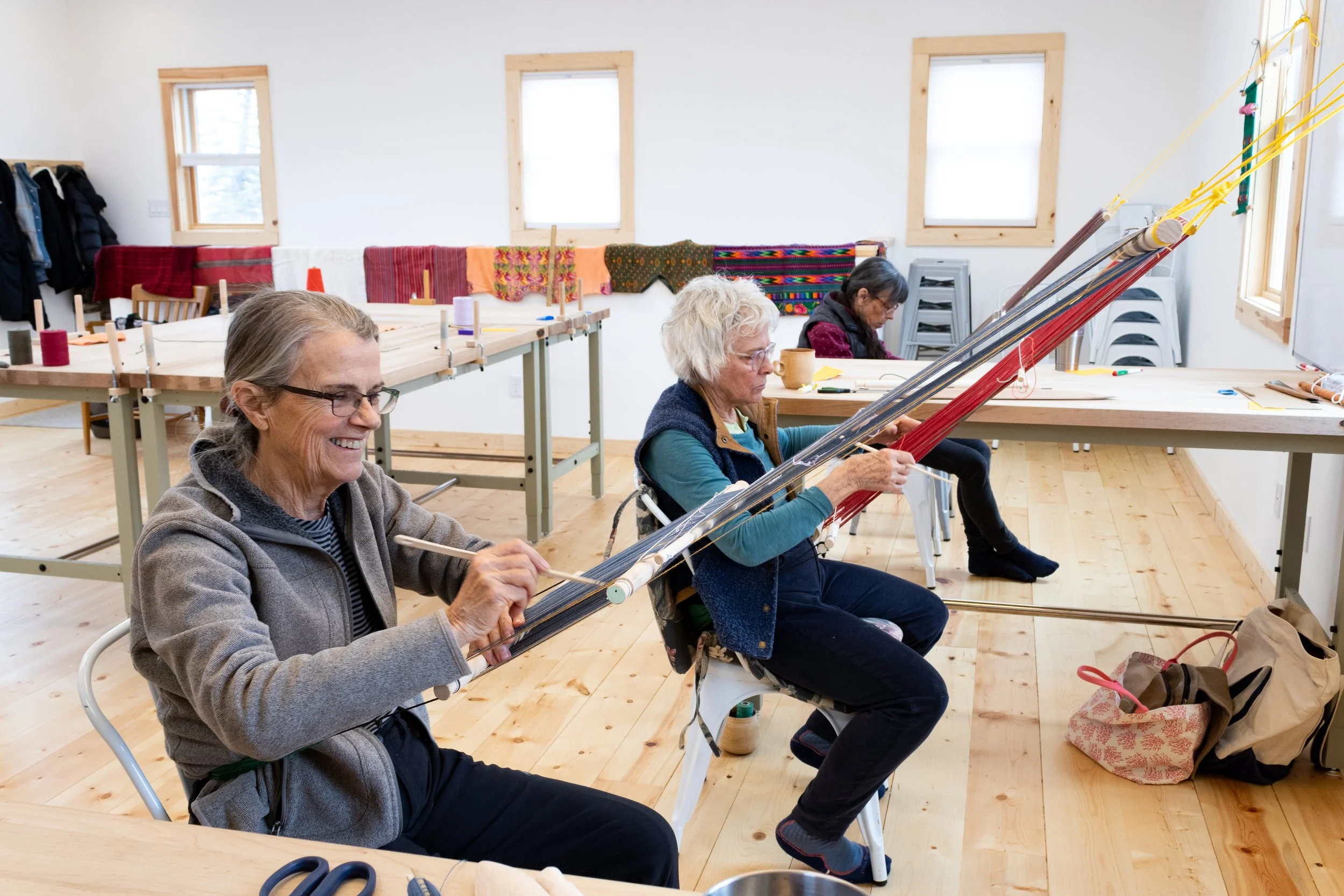
Description: In this workshop, we will weave in the Guatemalan style of backstrap weaving. This produces a sturdy, warp faced textile which can be embellished with vertical stripes, ikat, warp manipulation, or secondary weft. For those who are familiar with standard loom or rigid heddle weaving, the main difference you will find between those and Guatemalan backstrap weaving is that backstrap weaving uses a continuous warp (it isn’t cut to dress the loom) so that it is possible to create cloth with three or even four selvages (if you are really good!).
Backstrap weaving is a very good lesson for any weaver to learn or review the basics of weaving. It’s also very portable and takes up virtually no space in your studio (my loom fits into a cut off blue jean leg!).
For this two day workshop, you will observe a demonstration of the warping technique, which in some ways is much simpler than with European style looms – there are no eyes to thread!! Participants will begin with a pre-measured warp then continue the warping process with tying it on to the sticks “palos” and making string heddles. By the third day everyone should be well on their way with weaving, and most likely finish their project at home with a borrowed loom.
The project will be a two color cotton panel which can be used as a couch pillow or a hand towel.
Weaving yarn and backstrap looms are provided during class. You will have the option to borrow or buy a loom after class if you need to finish your project or wish to continue weaving on your own.
Workshop Fee: $225
Materials Fee: $45 to be paid directly to the instructor during class.
Optional Loom Purchase: $55
Related Courses/Events: Woodworking Courses
Dates: Sat-Sun, August 8-9, 2026, 9am-5pm
Optional, but highly recommended!
Friday, August 7, 6pm Urban Woodsman: Wood Carving in Detroit Craft Night Series presentation with Joey Traynor, arborist, craftsman, and instructor.
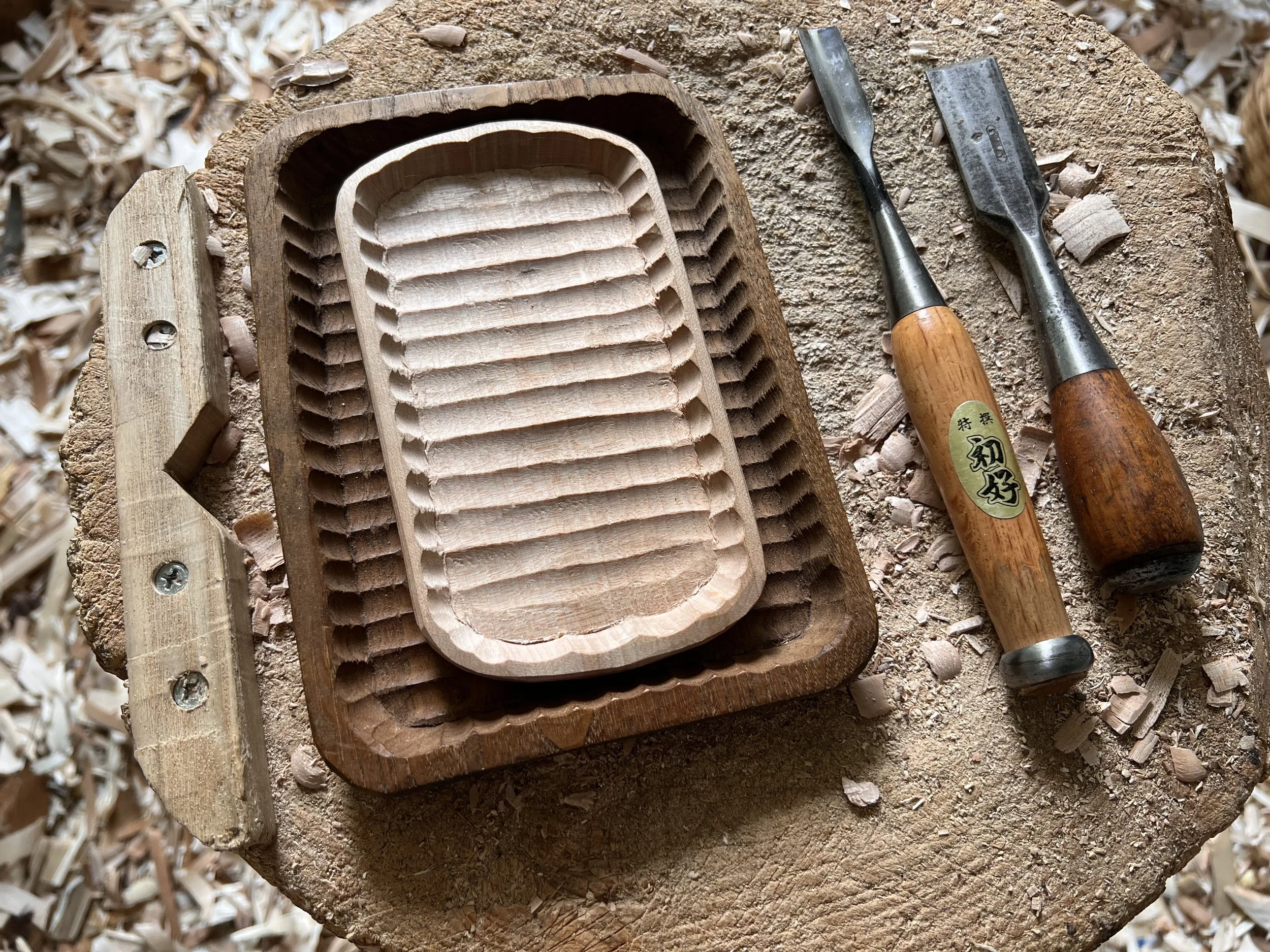
Description: In this two-day course we will learn how to carve freshly harvested wood to make a traditional Japanese tray called wagatabon. Students will split a log and carve a simple tray with a flat chisel and round gouge.
“The wagatabon is a type of wooden tray that used to be made by roof shingle makers in Wagatani village, Ishikawa, the snowy area of Japan. It is said that the trays had been made there since early 17th century. The makers used to cleave green chestnut logs to produce shingles, and kept the good ones to carve trays in winter.”
—excerpt from Jarrod’s Blog Here
All tools and materials will be provided. There will be an hour lunch break each day.
Workshop fee: $225
Materials Fee: $40
JOEY TRAYNOR is an arborist and green woodworker in Metro Detroit, Michigan. He teaches greenwood carving at Michigan Folk School and Traditional Ways Gathering. He was a former apprentice with Jarrod Dahl and learned wagatabon tray carving from Shinichi Moriguchi. Joey enjoys spending his time in nature, foraging mushrooms, and making things. @greatlakeswoodcraft
Related Courses/Events: Woodworking Courses
Dates: Fri-Sun, August 14-16, 2026, 9am-5pm
Optional, but highly recommended!
Thursday, August 13, 6pm Chasing the Grail: Uncovering the Mysteries of the Long Lost Kuksa Craft Night Series slideshow, film & storytelling presentation with Alex Yerks about his two recent month long trips to Sweden, as an ASF grant recipient.
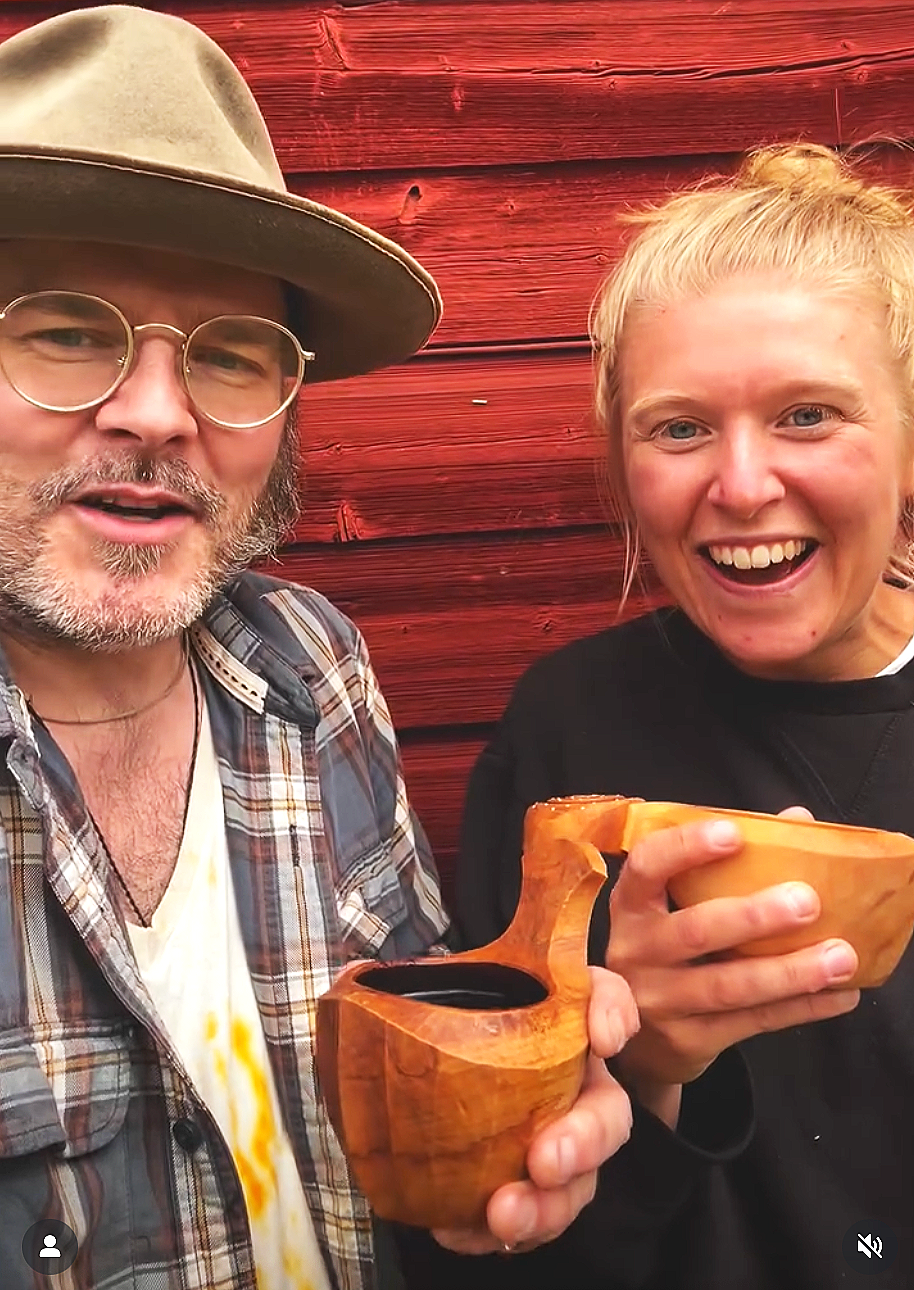
Description: A kuksa is a carved wooden cup from the Nordic region of Europe. They can be used to drink your daily morning coffee or any other beverage. Alex has been making and developing his own designs of kuksa for many years, as well as promoting their daily use. Alex enjoys working in the old tradition, filling the room with the clatter of axe work and the sound of super sharp gouges scooping out smooth thick curls of wood with unplugged tools.
This is a great class for beginners to learn carving with hand tools. The process of making a kuksa is similar to hand carved spoons and hand carved bowls. Alex will help you to become more confident carving with an axe, using techniques to slice smooth curved lines and develop an eye for forms, as well as power chop through thick end grain. More advanced carvers will find a whole new toolbox of techniques and carving concepts. Over the three day course you will learn multiple methods of hollowing with different gouges, hooks, and adzes. Once the rough work is done, you will be using a variety of knife grips, performed with safe body mechanics to bring your cup design into shape. You will learn about wood grain and orientation, spend time sharpening and discussing tool maintenance, and discuss drying and finishing techniques. If all goes as planned you will carve with a great group of people, make a mountain of wood chips, and toast “Skål” (“cheers”) from your wooden cup at the end. Kuksas can be a challenge to carve, but Alex’s unique approach and technique will help demystify the process.
Prerequisites: All skill levels are welcome, however, please note that this course requires hand strength, stamina, hand eye coordination and the ability to follow precise instructions with regards to safety. Being able to open a sealed jar is an example of basic hand strength. Ages 18 and up.
All tools and materials will be provided, but it’s encouraged that you have a basic carving kit. Recommended, but optional (see last photo):
Axe
Craft knife (Morakniv 106 or 120 recommended)
Hook knife
Gouge
Mallet
Saw
Adze
Compass
Workshop fee: $325
Materials Fee: $40 To be paid in class directly to the instructor.
ALEX YERKS is a fulltime craftsperson - slöjdare, teacher, photographer and writer who has been a daily woodcarver since 2009. Alex works in his studio in Stillwater, Minnesota designing, selling, and making woodenware for kitchens around the world. His specialty is kuksas—kåsa or noggin—nomadic style wooden drinking vessels hewn by axe and hollowed with a big iron scoop. Alex teaches year round nationally and internationally. He has taught classes in Australia, New Zealand, England, Scotland, Wales, and Sweden. Alex has also been a co-director of the Milan Spoon Gathering, the world’s oldest spoon carving festival, for ten years. Part of Alex’s approach to woodworking is thinking outside the box, using tools in unfamiliar ways, with big inspiration from the music he plays, the hand made life of dirt farmers and hobos he grew up around in the mountains of Upstate New York. All of his materials are harvested from local forests, and most of his work is carved while the wood is still fresh (green). www.alexyerks.com@alex_yerks
Related Courses/Events: Woodworking Courses
Registration closes August 7 so the instructor can prepare materials.
Dates: Friday-Sunday, August 21-23, 2026 9am-5pm
Optional: Thursday, August 20, 6pm Turned Round: Museum Collections Craft Night Series slideshow presentation with Derek Brabender about his recent wooden treen research.
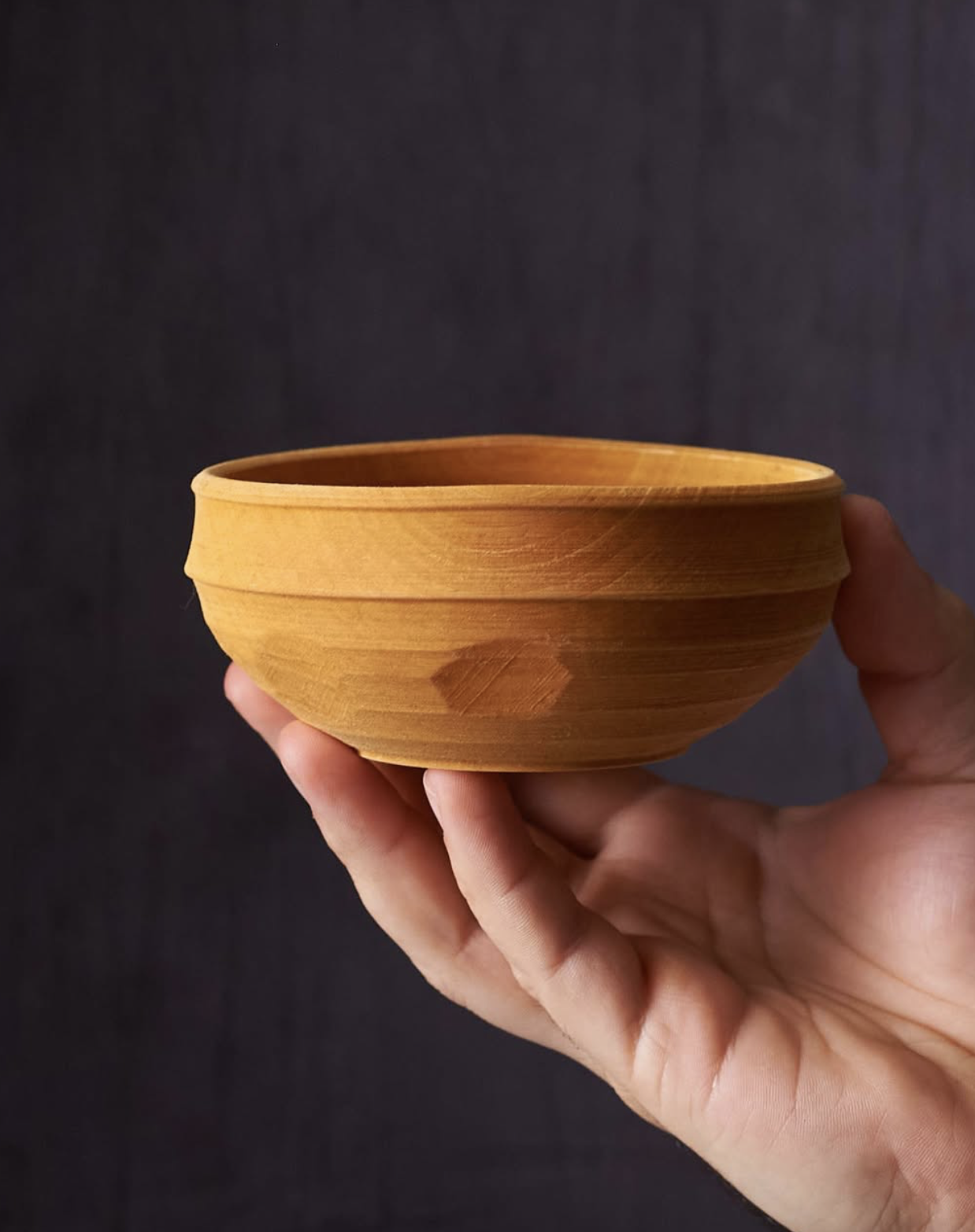
Description: During this three-day intensive we will learn to axe out blanks from green wood and turn bowls. We will cover the basics of turning, cutting techniques, and bowl design. We will also discuss handling and storing green wood, sharpening, axe skills, and how to dry and finish your bowls. Beginners will be guided through the basics of turning open form bowls while those with experience or those who have taken the class before can take on more advanced techniques like end-grain cup turning, nests (multiple bowls from one piece of wood), and handled mugs. Instruction will be given according to your personal goals and skill level.
Students should be prepared for a very physically demanding class that requires a certain level of stamina, coordination, and physical strength as well as the ability to follow precise instructions with regard to safety. Students must be able to stand on one leg for extended periods of time and have the hand strength to open a sealed jar or swing an axe or hammer repeatedly. Ages 18 and up.
All tools, lathes, and materials will be provided.
If you would like to bring your own tools-optional:
Axe
Spoon or Hook knife
Folding Saw
Craft knife (Morakniv 106 or 120 recommended)
Pole Lathe turning hooks
Click here to purchase Pole Lathe Plans for Bowls & Cups or Pole Lathe Turning Hook Tools
Workshop fee: $325
Materials Fee: $40 to be paid directly to the instructor during class.
DEREK BRABENDER found his passion for green woodworking after carving his first spoon in 2014. What began as a fascination with spoon carving quickly grew into a broader exploration of crafting household treen. After taking his first turning course with Jarrod Dahl in 2017, pole lathe turning became the primary focus of Derek’s green woodworking practice. In 2024, Derek received an Artist Fellowship from the American Scandinavian Foundation to study advanced turning techniques and pole lathe pedagogy with Jarrod, explore the historical context of the pole lathe in Nordic countries, and build a set of lathes to increase public awareness and engagement with this craft and its importance to Scandinavian folk art. Derek lives with his family in Stoughton, WI. www.greenwoodspoons.com @green_wood_spoons
Related Courses: Basketry Courses
Dates: Saturday-Sunday, August 29-30, 2026, 9am-5pm
Optional: Friday, August 28, 6pm LivelyBaskets Craft Night Series presentation with Emily Dirke
Registration closes August 14 so the instructor can prepare materials.
Description: Learn to weave a sturdy, useful willow basket in this two day workshop. Whether you're brand new to basket making, or have woven a few, this class is tailored to beginners and continuing learners alike, with options for more advanced weaves if you're looking for that next step. Making a basket utilizes some of the most foundational skills in any craftwork—plant use and identification, basic knife skills, pattern recognition, hand strength and coordination. Traditions of basket making exist around the world, and styles depend on things like material availability, culture and function. In this class we'll be working in European stake and strand tradition to create a medium sized, handled basket.
Tools:
Bring pruning shears (these are good ones Okatsune)
Craft knife Morakniv 106 or 120 (optional)
Rapping iron (optional)
Bodkin (optional)
There will be a few knives, rapping irons and bodkins to share
Workshop fee is $225
Materials Fee: $50
EMILY DERKE is a craftsperson in a number of different mediums, but basket making has always taken priority. Learning to make the things we need and use has brought her all over the country and internationally to learn from many skilled teachers. With so much to learn and dive into, somehow she always comes back to the willow basket.

Related Courses/Events: Woodworking Courses
Dates: Sat-Sun, September 5-6, 2026, 9am-5pm plus Monday, September 7, 2026
Optional: Friday, September 4, 6pm Our Wooden Spoon Collection Craft Night Series presentation with Jarrod Dahl The Wooden Spoon Drawer Exhibition & Talk.
Description: Spend 2 or 3 days making wooden spoons. Beginner, intermediate and advanced carvers will all learn something in this class. Students will start with freshly harvested wood and simple, effective tools; the axe and Swedish carving knife. They will review the process of turning a whole log into rough blanks with wedges and the carving axe, systematically learn basic and advanced knife grips, and hone their focus and self-awareness by carving chopsticks. Next, students will learn how to use the hook knife and build an eye for spoon design through observation and carving small stirring spoons. More nuanced and advanced techniques will be discussed with students ready to go further.
By day two students will be carving the deceptively simple eating spoon with their newly gained knowledge and skills. Proper knife techniques as well as fine workmanship will be stressed. Throughout the class there will be short lectures, demonstrations and guided practice sessions. Jarrod will discuss where to acquire tools, how to care for and sharpen your tools, refining your carving technique, understanding wood grain, and finishes for woodenware. Carvers with prior experience will be encouraged to further develop their carving technique and design skills through critique and lessons tailored to their level of experience.
Day 3 will allow students to continue deepening their skills and make more spoons. Serving and cooking spoons will be addressed. The class will engage in observation and respectful critique of a selection of spoons from Jarrod’s wooden spoon collection. Students will receive more individualized attention regarding knife and axe technique as time and skill levels allow.
Prerequisites: All skill levels are welcome, however this course requires hand strength, stamina, hand eye coordination and the ability to follow precise instructions regarding safety. Being able to open a sealed jar is an example of basic hand strength. Ages 18 and up.
All tools and materials will be provided.
Feel free to bring your own sharp carving knife if you have one. We recommend this craft knife Morakniv 106
Workshop fee: $225 2 Days or $300 3 Days
JARROD DAHL is a full-time craftsperson, teacher, and writer who has worked with wood professionally since 1996. He runs Woodspirit Handcraft with his wife Jazmin, where Jarrod designs, makes, and sells woodenware. He specializes in turning green wood into handled cups, bowls, plates, and boxes and carving a wide variety of knife finished cooking and eating utensils. Jarrod teaches handcraft nationally and internationally as well as trains apprentices. He has studied and researched woodenware in museum archives in the US, Sweden, UK, and Japan. His designs have been influenced by these traditional everyday objects. Jarrod has extensive knowledge of harvesting and processing natural materials, forging and using hand tools, and making a wide variety of craft from basketry to canoes. He takes a philosophical, historical and pragmatic approach to making, teaching, and advocating for handcraft. Jarrod writes a blog, and has written for Popular Woodworking and Mortise & Tenon Magazines. He made two DVDs, The Art of Spoon Carving (with Popular Woodworking) and One Tree about green woodworking recorded in Japan. He also has a forthcoming book with Lost Art Press on Spring Pole Lathe Turning. He lives in Northern Wisconsin. www.woodspirithandcraft.com instagram: @jarrod__dahl @woodspirithandcraft
Related Courses: Basketry & Textile Courses
Date: Saturday, December 5, 2026 Choose: Morning: 10am-12:30pm or Afternoon: 1:30-3:30pm
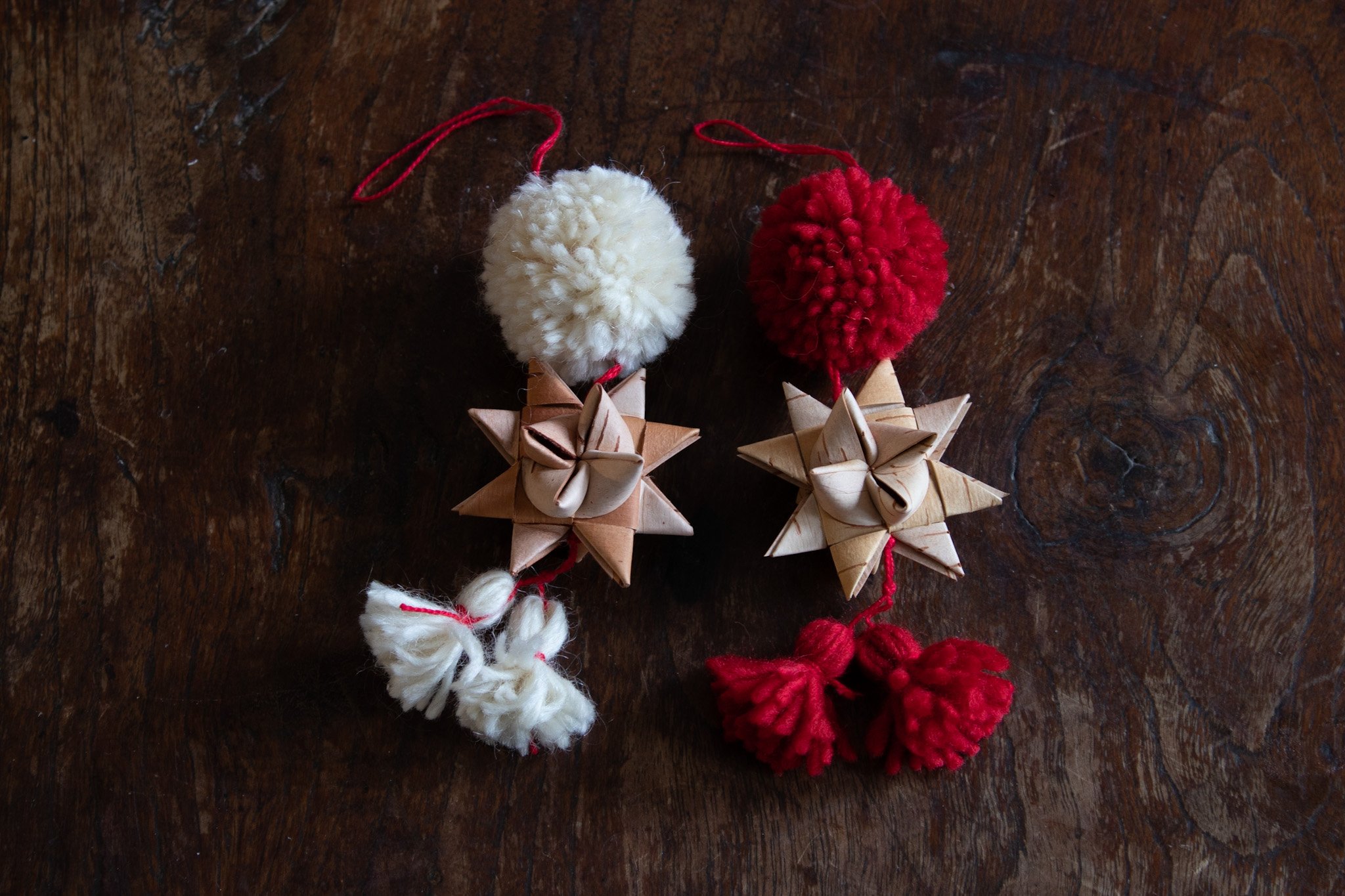
Description: Jazmin will guide you through making her design of a woven birch bark star ornament with wool pompoms and tassels, just in time to dress your Christmas tree or winter window. All materials will be provided.
Bring:
Small pointed tip scissors
Needle nose pliers (optional)
Workshop Fee: $40 Choose Morning or Afternoon Session
JAZMIN HICKS-DAHL studied birch bark weaving with Jarrod Dahl and Vladimir Yarish. She designed this star ornament several years ago and is excited to share how to make them in this class. She makes indigo dyed textiles both stitched and handwoven for Woodspirit Handcraft, a traditional craft business she runs with her woodworker husband. She spent 8 yrs teaching children in the SF Bay Area where she grew up before moving to the Northern Lands. Her background includes art & design, a love of natural materials, fine threads, folk textiles, and an obsession with indigo since her teens.
Related Courses: Textile Courses
You also may be interested in:
Craft Night June 12 Turning Flax into Cloth presentation & demonstration with Jazmin Hicks-Dahl. Watch or take part in the processes of making flax plants into fiber, thread and cloth.
FLAX DAY: Join us on September 19!
Sign up for location & details of Harvest Festival & Flax Day at Heritage Hill Homestead.
We are collaborating with LeeAra Anglin of Heritage Hill Homestead. This family friendly Harvest Festival will include handmade icecream, dancing, potluck, and visiting farm animals. Be prepared to roll up your sleeves for Flax Linen Processing and try out Natural Dyeing with Boda Bayfield from homegrown dye plants.
1pm Welcome
1:30pm Flax Processing Demonstration
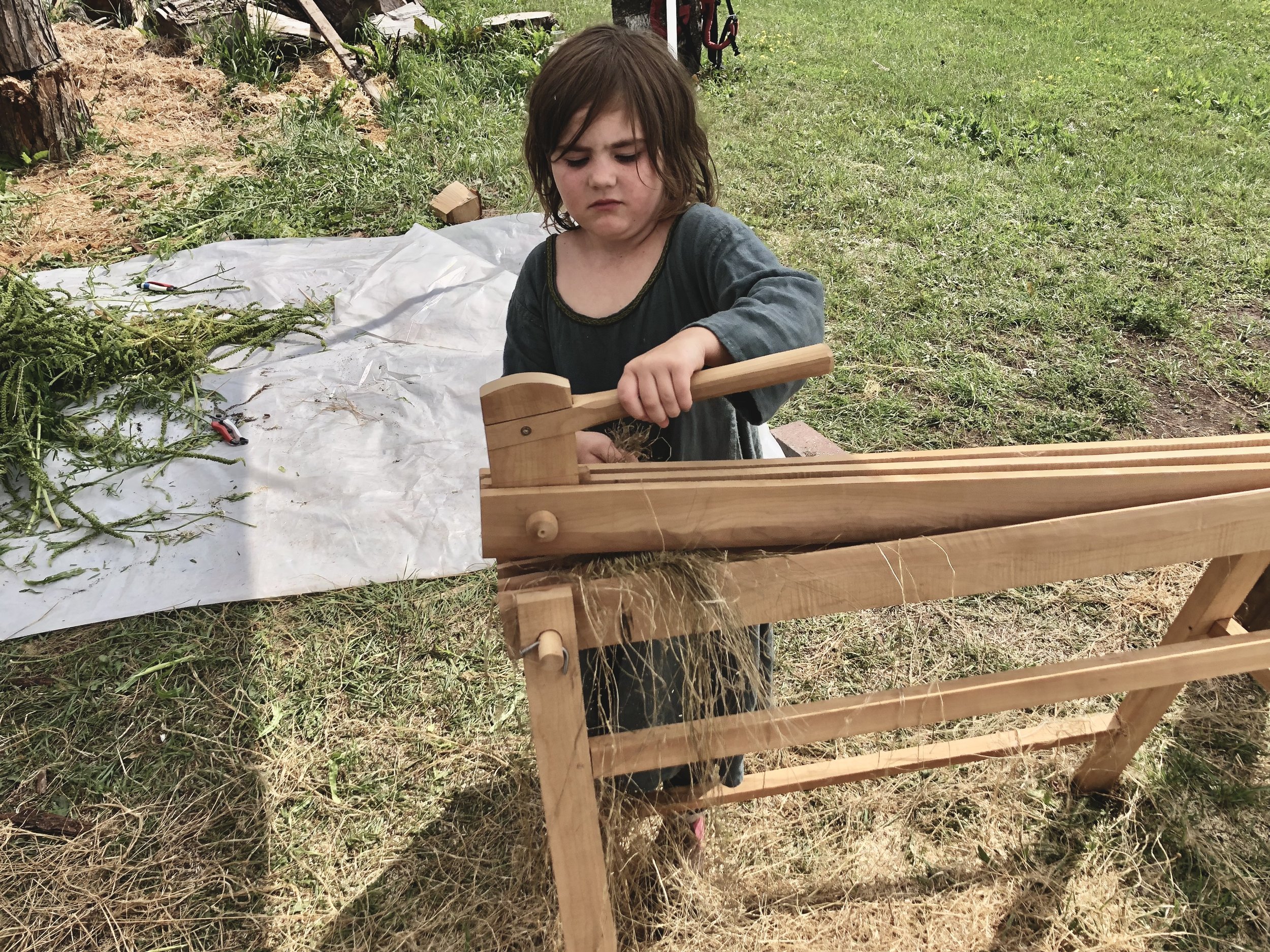
We will be breaking and combing retted home grown flax, then making stricks of linen—bundles of raw fiber for spinning and weaving into cloth.
Bring
a potluck item with ingredients listed
water bottle
your own dishes and cutlery
clothes that can get dirty
a dust mask, gloves
dancing shoes
Location Heritage Hill Homestead near Mason Township, WI, (address will be sent after registration)
REGISTER so you can receive updates and details about this event! This event is family friendly. We are requesting donations of $5 per person or $10 per family for operational costs. You can pay cash at the event.
Welcome all craft interested folks! Meet our extraordinary instructors and learn about their craft and work through presentations, demonstrations, exhibitions, and experiences. You don’t need to be signed up for a workshop to attend Craft Night. Students, their companions and families, Chequamegon Bay local residents, and people visiting the area from afar are all invited.
Join us for a shared meal before the presentation. We provide the soup, wooden plates, spoons, and bowls. We ask you to bring a tasty side dish and your preferred beverage.
Schedule
6pm Doors Open—sign-in when you arrive
6:30pm Shared Meal
7pm Instructor Presentation
We look forward to seeing you there!
Want reminders about Craft Nights? Sign up for our newsletter email list here.
Topics are subject to change
NEXT CRAFT NIGHT:
August 7 Urban Woodsman: Wood Carving in Detroit presentation with Joey Traynor. @greatlakeswoodcraft
August 13 Chasing the Grail: Uncovering the Mysteries of the Long Lost Kuksa slideshow, film & storytelling presentation with Alex Yerks about his two recent month long trips to Sweden, as an ASF grant recipient.
August 28 Lively Baskets presentation and exhibition with Emily Dirke on willow basketry.
September 4 Our Wooden Spoon Collection presentation with Jarrod Dahl. The Wooden Spoon Drawer Exhibition & Talk.
PAST CRAFT NIGHTS:
April 30 Drink Up! Norwegian Ale Hens slideshow & exhibition with Mike Loeffler
May 15 Baskets in Lichtenfels: International Basket Festival slideshow & basket collection exhibition with Jarrod Dahl.
June 3 So Many Scandinavian Baskets! slideshow & basket collection exhibition plus splint making demonstration with Jarrod Dahl.
June 12 Turning Flax into Cloth presentation & demonstration with Jazmin Hicks-Dahl. Watch or take part in the processes of making flax plants into fiber, thread and cloth.
July 9 Japanese Textile Travels with Jazmin Hicks-Dahl. Jazmin will present photos from three trips to Japan, display her textile finds and share recommendations for future travelers.
July 16 All Blue: Japanese Indigo Dyeing Experience with Jazmin Hicks-Dahl. Watch or try out dyeing in a sukumo indigo vat. Registration is required to participate in dyeing, as space is limited. Register here.
Craft Night Series 2026
April 30 Drink Up! Norwegian Ale Hens
exhibition & slideshow with Mike Loeffler.
May 15 Baskets in Lichtenfels: International Basket Festival
slideshow & basket collection exhibition with Jarrod Dahl.
June 3 So Many Scandinavian Baskets!
slideshow & basket collection exhibition plus splint making demonstration with Jarrod Dahl.
June 12 Turning Flax into Cloth
presentation & demonstration with Jazmin Hicks-Dahl. Watch or take part in the processes of making flax plants into fiber, thread and cloth.
July 9 Japanese Textile Travels
presentation with Jazmin Hicks-Dahl. A show and tell of textiles and photos from three trips to Japan.
July 16 All Blue: Japanese Indigo Dyeing Experience
with Jazmin Hicks-Dahl. Watch or try out dyeing in a sukumo indigo vat. Registration is required to participate in dyeing, as space is limited. Register here.
July 31 Latin American Textile Travels
presentation with Louise Young. A show and tell from Louise’s amazing textile collection and talk about her travels to Guatemala and beyond.
August 7 Urban Woodsman: Wood Carving in Detroit
presentation with Joey Traynor.
August 13 Scandinavian Wood Carving Traditions & Travels
slideshow presentation with Alex Yerks about his recent travels as an ASF grant recipient.
August 20 Turned Round: Museum Collections
slideshow presentation and woodenware exhibition with Derek Brabender about his recent wooden treen research.
August 28 Lively Baskets
presentation and exhibition with Emily Dirke on willow basketry.
September 4 Our Wooden Spoon Collection
presentation with Jarrod Dahl. The Wooden Spoon Drawer Exhibition & Talk.
September 18? Japanese Woodturning & Urushi
presentation with special guest, Eiko Tanaka from Japan.
Work Study Opportunities
If you live nearby, have some free time and can do a variety of manual labor jobs, we are offering limited work-study opportunities for spots in select classes. Contact us here for more information.
Cancellation Policy
Cancellation/Refunds: Cancellation is very difficult due to small class sizes and the challenges of replacing your spot. Let us know as soon as possible if you are cancelling. All cancellations are subject to a 15% cancellation fee. Some courses have a Special Cancellation Policy listed in their description.
Standard Cancellation Policy: 85% refund for cancellations more than 6 weeks before the start of class. No refunds for cancellations of less than 6 weeks unless your place in class is filled by someone on a waitlist.
Special Cancellation Policy: No refunds for cancellations unless your spot is filled from the waitlist.
Woodspirit School Cancellation: If the workshop is cancelled by Woodspirit School a full refund will be given. If a class doesn't meet minimum enrollment 6 weeks before start, we may cancel. Make sure your lodging and transport reservations will refund you if this happens.

Have a Happy New Year!
Jarrod & Jazmin, Woodspirit School